
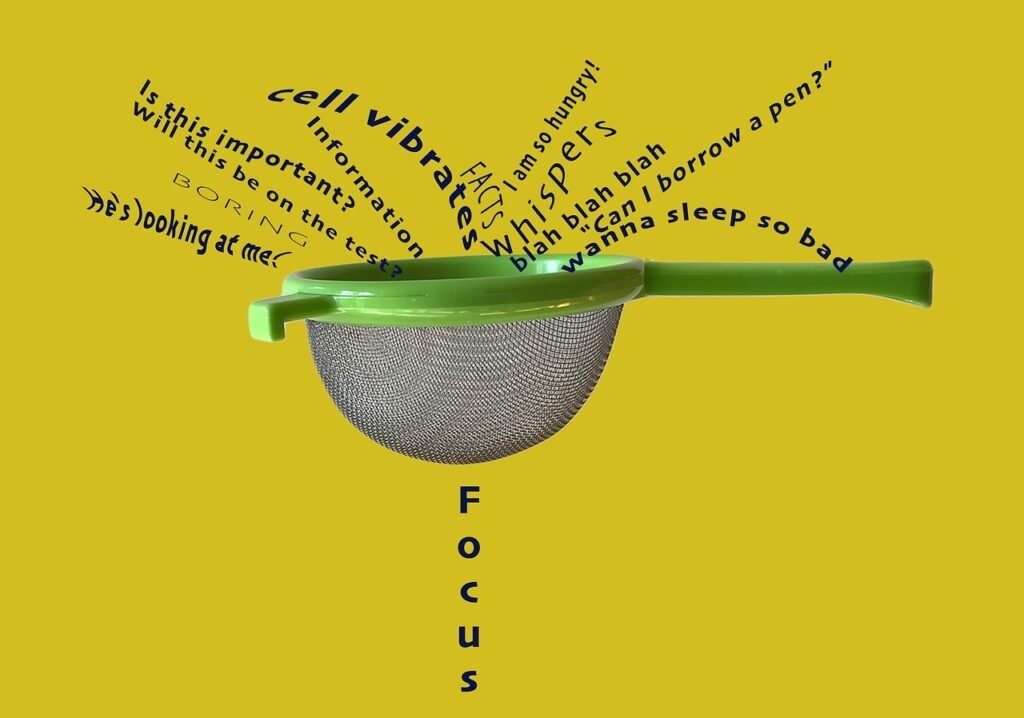
If focus feels harder than it used to, you’re not imagining it.
Many people feel like their attention has slowly eroded over time. Tasks that once felt manageable now require more effort to start. Concentration fades quickly. Even when you care about the work, staying with it feels difficult.
The instinct is to assume something is wrong—that you’ve lost discipline or motivation.
But in most cases, focus isn’t lost. It’s simply out of practice.
In a distracted world, focus isn’t something you force. It’s something you rebuild.
Why Focus Feels So Difficult Right Now
Modern environments train attention to move quickly. Notifications, short-form content, and constant switching teach your brain to expect novelty.
Over time, slower tasks begin to feel uncomfortable. Not because they’re harder, but because they require sustained attention your brain hasn’t been using as often.
This is why many people ask, “Why can’t I focus anymore?” The answer usually isn’t laziness—it’s overstimulation, as explained in [You’re Not Unproductive — You’re Overstimulated].
The good news is that attention adapts both ways.
Just as it learned distraction, it can relearn depth.
Focus Is a Skill, Not a Personality Trait
One of the biggest myths about productivity is that focused people are simply wired differently.
In reality, focus behaves more like physical fitness. When it’s used consistently, it strengthens. When it’s constantly interrupted, it weakens.
Trying to jump straight into hours of deep work after months or years of fragmented attention is like trying to run a marathon without training.
The discomfort people feel when trying to focus again isn’t failure. It’s rebuilding.
Start Smaller Than You Think You Should
Most people try to fix focus by increasing intensity. Longer sessions. Stricter rules. More pressure.
This usually backfires.
Instead:
- Work in shorter focus blocks (20–40 minutes)
- Keep only one task visible
- Stop before your attention completely drops
Ending while you still have some mental energy makes it easier to return later.
Consistency rebuilds focus faster than effort.
Reduce Switching, Not Effort
Attention drains less from hard work than from constant switching.
Every time you check a message, open a new tab, or change tasks, your brain resets slightly. Over time, this creates the feeling of working all day without getting anywhere.
If you’ve already started reducing overstimulation—as discussed in [How to Reduce Overstimulation Without Quitting Technology]—you’ve already taken the most important step.
Focus grows in environments where fewer things compete for it.
Let Focus Feel Boring Again
This is the part most people don’t expect.
Real focus feels quieter than stimulation. Slower. Sometimes even a little boring at first.
That’s not a problem. It’s a sign your attention is settling.
When you stop expecting constant stimulation, your tolerance for depth increases naturally. Tasks that once felt difficult begin to feel absorbing again.
Rebuilding Focus Takes Time
There’s no quick reset for attention. But there also doesn’t need to be.
Small, consistent changes compound:
- Fewer inputs
- Shorter, intentional focus sessions
- Real breaks between stimulation
Over time, focus stops feeling forced. It becomes normal again.
A Different Way to Measure Progress
Instead of asking, “How long did I focus today?” try asking:
“Did I make space for focus to happen?”
Because in a distracted world, focus isn’t about pushing harder. It’s about removing what pulls you away.