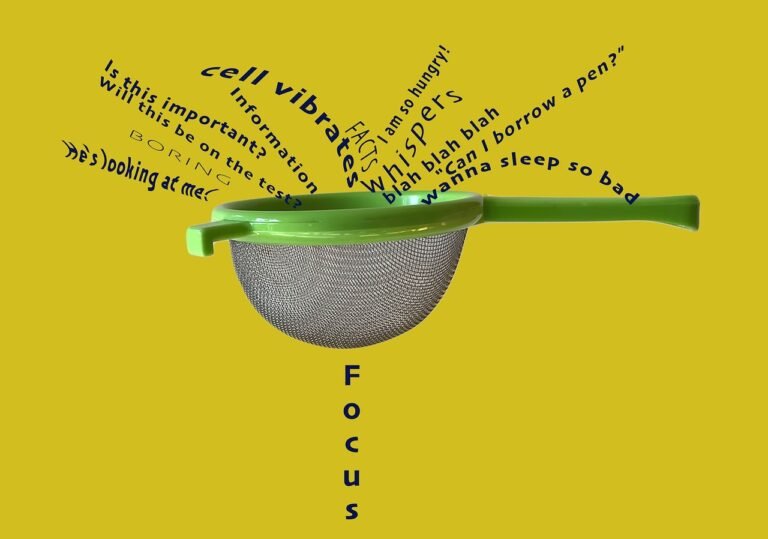

For many people, the moment they realize they’re overstimulated, the advice that follows is flat out unrealistic.
Delete your apps.
Stop using your phone.
Do a full digital detox.
Most of us don’t want to disappear from modern life and technology isn’t the enemy. It’s how we work, learn, communicate, and relax.
The real goal isn’t to remove technology.
It’s to reduce constant stimulation so your attention has room to recover.
If you’ve been feeling scattered or unable to focus, this is often the missing piece. As we explored in [You’re Not Unproductive — You’re Overstimulated], focus struggles today are usually environmental, not personal.
And the solution doesn’t have to be extreme.
1. Reduce Input Before You Reduce Usage
Most people try to solve overstimulation by cutting screen time. But the real issue usually isn’t how long you’re online, it’s how intense the input is.
Fast-cut videos, endless scrolling, constant notifications, and multiple streams of information force your brain into continuous context switching. That’s exhausting.
Instead of immediately reducing time, start by reducing intensity:
- Turn off non-essential notifications
- Move social media off your home screen
- Switch feeds from algorithm-driven to intentional (search instead of scroll)
- Listen to slower content like podcasts or long-form videos instead of short clips
Your brain relaxes when it knows input will be predictable.
If you’re unsure how stimulation builds throughout the day, this connects closely to [Why You Feel Tired Even When You Didn’t Do Much], where we explain how attention switching drains mental energy.
You’re not removing technology. You’re lowering the noise level.
2. Create “Single-Channel” Moments
Overstimulation happens when your brain processes too many channels at once — email open while messaging, music playing while scrolling, notifications appearing while working.
Modern life makes multitasking feel normal, but cognitively, it’s expensive.
Try introducing single-channel moments throughout your day:
- Work without background media for one task block
- Eat without scrolling
- Walk without headphones occasionally
- Finish reading one thing before opening another
These moments feel uncomfortable at first because your brain is used to constant input. That discomfort is actually your nervous system recalibrating.
Focus starts returning when your brain learns it doesn’t need to track everything at once.
3. Design Friction Into High-Stimulation Habits
The apps that overstimulate you most are usually the easiest to access. They’re one tap away, always available, and designed to remove friction.
You can rebalance this without relying on willpower by adding small barriers:
- Log out of social apps after use
- Keep entertainment apps on a second screen or folder
- Use grayscale mode during work hours
- Set app timers that require conscious overrides
- App blockers that require physical effort to override
Friction creates a pause. And pauses give you the chance to choose instead of react. You’re not banning anything — just slowing the automatic loop.
4. Replace, Don’t Remove
One reason digital detoxes fail is that they remove stimulation without replacing it. The brain doesn’t like sudden emptiness, so it seeks stimulation elsewhere.
Instead, swap high-stimulation inputs for lower-stimulation ones:
- Replace scrolling with reading or long-form content
- Replace background TV with instrumental music or silence
- Replace constant checking with scheduled check-in times
This keeps your brain engaged without overwhelming it. Think of it like switching from junk food to whole food, still satisfying, just easier to process.
If you’ve ever tried to quit apps entirely and struggled, [Why Digital Detoxes Often Fail (and What Works Instead)] explains why replacement works better than restriction.
5. Build “Off-Ramps” Into Your Day
Many people don’t realize overstimulation accumulates because there’s no transition between activities. Work ends and scrolling begins. Scrolling ends and sleep is expected immediately.
Your brain needs off-ramps.
Simple transitions help your nervous system reset:
- A 5-minute walk after work
- Stretching before switching tasks
- Writing tomorrow’s priorities before logging off
- Dimming lights an hour before bed
These signals tell your brain that stimulation is decreasing. Over time, this makes it easier to relax without needing constant distraction.
This is especially important if evenings feel wired but tired — something we cover in [Why Your Brain Won’t Shut Off at Night].
6. Accept That Calm Feels Strange at First
This part surprises people.
When you first reduce overstimulation, calm can feel boring. Or restless. You may feel the urge to reach for your phone without knowing why.
That’s normal.
Your brain has adapted to high levels of input, and lower stimulation feels unfamiliar — not wrong. Give it time. Within days or weeks, most people notice:
- Longer attention spans
- Less mental fatigue
- Reduced anxiety
- Better sleep
- More enjoyment in simple activities
Calm stops feeling empty and starts feeling spacious.
Technology Isn’t the Enemy
You don’t need to escape modern life to feel focused again. The goal isn’t less connection, less information, or fewer tools. It’s intentional interaction instead of constant exposure.
When technology works for your attention instead of against it, you keep the benefits without paying the mental cost.
And often, the biggest change isn’t doing less — it’s finally feeling like your mind has room to think again.